
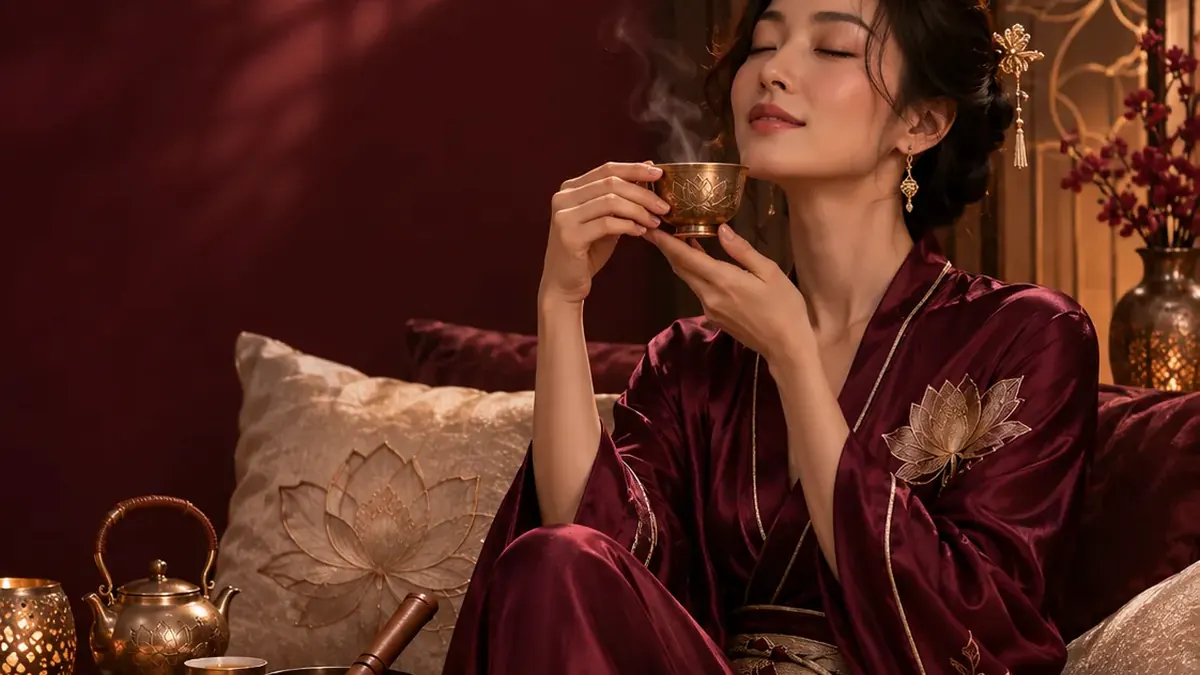
Spaces, materials, and art can support reflective experiences without becoming proof of spiritual authority or medical benefit.
Editorial review: November 12, 2026 · Educational material
Materials shape atmosphere
Soft light, textiles, flowers, comfortable seating, and quiet music can change how a room feels. Preferences vary; a thoughtful experience permits choices and avoids equating ever-stronger sensation with depth.
Distinguishing art from sacred authority
Lotuses and mandala-inspired forms carry meanings in particular traditions. A contemporary visual interpretation can be presented honestly as design inspiration. Actual religious objects deserve provenance, correct attribution, and sensitivity to their original settings.
What a well-designed private experience offers
The essential elements are a clear subject, comfortable conditions, intelligible teaching, respect for personal boundaries, and choice. Excellent service does not require expensive aromas or theatrical claims of spiritual power. Substance gives the aesthetic a purpose.
How to read this topic responsibly
This guide separates historical description, present-day interpretation, and evidence. The questions below help make that distinction practical.
- Which source is speaking? Identify its date, tradition, author, and intended audience.
- Is a statement symbolic, cultural, personal, or supported by reproducible research? These are not equivalent kinds of evidence.
- What can a reader actually do with this information? Begin with reading, discussion, and gentle public practices; reject pressure or extraordinary promises.
Connections worth exploring
The question explored here — Sensory Art and Ritual Aesthetics: An Editorial Guide — belongs to the wider field of Sensory Mindfulness. Compare it with the adjacent readings below. Cultural meaning, individual preference, and scientific findings should be considered separately; none of those categories automatically validates a commercial promise.
Aesthetic ritual and ordinary perception
Silk, flowers, tableware, candlelight, and natural textures may form an editorial language for a private salon. They encourage observation of color, surface, warmth, and space without requiring every material to carry an unverified therapeutic property.
A carefully designed environment also considers fragrance sensitivity, lighting, and comfort. Incense is not suitable for everyone, and unscented alternatives are appropriate. An aesthetic ritual is not automatically a religious rite, and interior design should not substitute for truthful cultural explanation.
Sources & Further Reading
The links below support historical or health-related distinctions made in this article. They do not imply endorsement of SACRED TANTRA.