
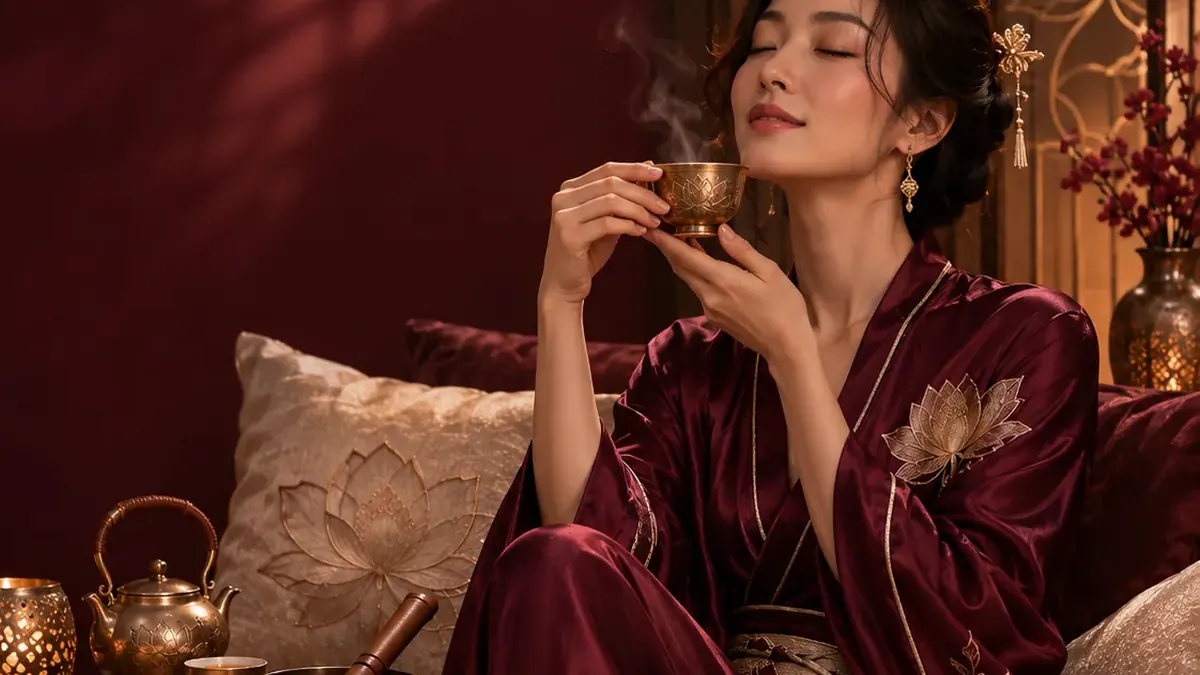
Sensory mindfulness is less about chasing intensity than noticing ordinary experience with curiosity and choice.
Editorial review: November 12, 2026 · Educational material
Begin with one sense
Listen to a piece of music and notice layers of sound; feel the texture of a piece of natural fabric; study changes in light across a flower. The task is to observe what is actually present, not claim that a particular aroma transmits invisible curative energy.
Intensity is not the goal
Some people prefer silence while others enjoy sound; fragrances can also be unpleasant or trigger sensitivities. A thoughtful experience offers scent-free options, open-eye participation, and an easy way to pause. Choice is part of the quality of the setting.
Beauty plus intellectual substance
Rich textiles, burgundy and gold details, floral arrangements, and calm architecture can support a contemplative atmosphere. They cannot replace well-grounded teaching. Specific cultural explanations and approachable practices are more useful than promises of instant awakening.
How to read this topic responsibly
This guide separates historical description, present-day interpretation, and evidence. The questions below help make that distinction practical.
- Which source is speaking? Identify its date, tradition, author, and intended audience.
- Is a statement symbolic, cultural, personal, or supported by reproducible research? These are not equivalent kinds of evidence.
- What can a reader actually do with this information? Begin with reading, discussion, and gentle public practices; reject pressure or extraordinary promises.
Connections worth exploring
The question explored here — Sensory Mindfulness: Sound, Scent, Texture, and Presence — belongs to the wider field of Sensory Mindfulness. Compare it with the adjacent readings below. Cultural meaning, individual preference, and scientific findings should be considered separately; none of those categories automatically validates a commercial promise.
The value of gentleness and choice
Sensory mindfulness is not necessarily about pursuing a more intense stimulus. It may mean noticing light, temperature, sound, scent, and texture in ordinary activities: the warmth of a tea cup, the sound of footsteps, or changing music in a quiet room. Such observation can be entirely individual and non-contact.
Sensitivities to fragrance or sound, previous experiences, and health differences can change how someone responds. An accessible experience allows visitors to adjust the sensory environment or discontinue an exercise. The quality of a private session depends on attention to these choices, not on manufactured mystery or promises of extraordinary states.
Sources & Further Reading
The links below support historical or health-related distinctions made in this article. They do not imply endorsement of SACRED TANTRA.